
Reishi Mushroom Extract Prices in the UK: Best Value & Where to Buy
The Simple Price Answer Reishi mushroom extract costs £10–£35 per month depending on quality and
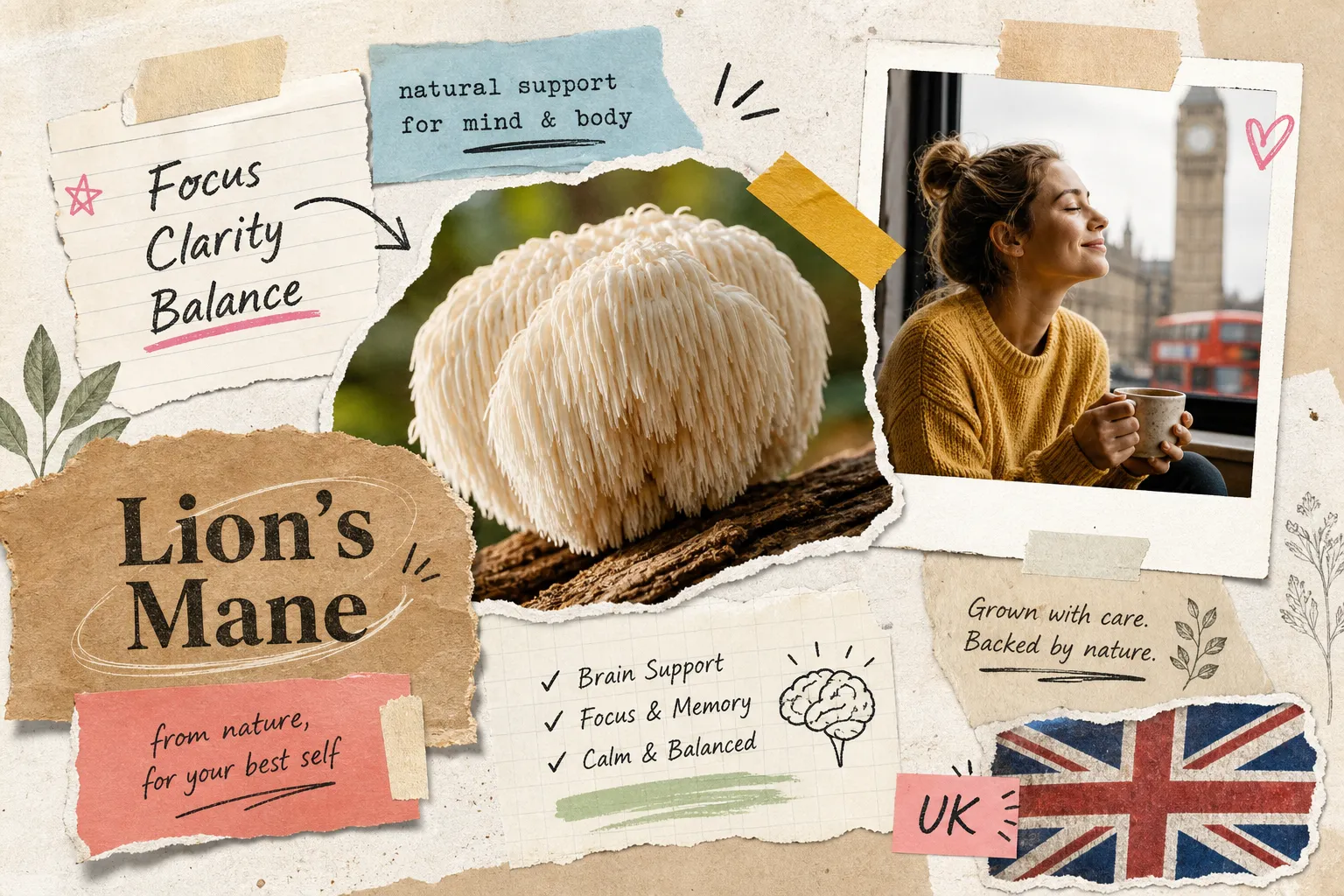
Lion’s mane UK interest has surged in recent years. You’ll find Hericium erinaceus on pharmacy shelves, in wellness newsletters, and in the supplement stacks of people who’ve never knowingly eaten a wild mushroom. Most of them have very little idea what they’ve actually bought. That’s not a criticism; it’s just where the market is right now: loud on claims, quiet on substance.
The research, while still early, points to genuinely promising mechanisms, particularly around nerve growth factor synthesis and cognitive support, that set lion’s mane apart from many adaptogens. But the gap between what the science supports and what’s printed on supplement labels is wide enough to matter. This guide covers the legal landscape, the real evidence, the different product forms, and the quality markers that separate a useful supplement from an expensive powder. UK Mushrooms Ok was built around exactly this kind of transparency, sourcing from Welsh and Scottish micro-farms and making traceability central to every product rather than a footnote.
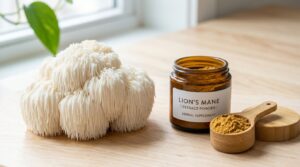
If you’ve only ever seen lion’s mane in a photograph, the first thing that strikes you is how alien it looks. White, cascading, resembling something between a sea urchin and a waterfall, Hericium erinaceus grows on the dead and dying wood of broadleaf trees, particularly beech and oak. It’s a native British species, which surprises most people who assume it’s entirely Asian in origin.
Wild lion’s mane in the UK is concentrated in old deciduous woodland across southern England and eastern Wales, fruiting between July and November on damaged or felled trees. It’s listed on the UK’s Red Data List and is a Biodiversity Action Plan species, which reflects just how precarious its wild populations are. Its specific requirements, wounded or decaying hardwood in mature woodland, mean the habitat itself is vanishing faster than the fungus can establish.
Even where conditions are right, lion’s mane’s germination rate is poor. According to British Mycological Society distribution records and the UK’s Red Data List, wild populations are sparse enough that encounters are genuinely extraordinary. This rarity is precisely why it became one of only four fungi species protected under Schedule 8 of the Wildlife and Countryside Act 1981, the highest level of legal protection available to wild fungi in the UK. Cultivation is not just the convenient option; it’s the only responsible one.
The legality question around lion’s mane in the UK comes up constantly, and it deserves a straight answer. The short version: you can buy it, grow it, eat it, and sell it. You cannot forage it. Those two facts exist in the same law and are not contradictory.
Schedule 8 of the Wildlife and Countryside Act 1981 makes it illegal to intentionally pick, uproot, or damage wild lion’s mane. This applies whether the intention is personal use, commercial sale, or simply taking a cutting for identification purposes. The penalties are serious: up to six months in prison or an unlimited fine. CPS guidance goes further in commercial cases, recommending fines of up to £5,000 per item seized and vehicle forfeiture in aggravated situations. This isn’t enforced daily, but it is real law with real consequences.
Possession, home cultivation, purchase, and sale of cultivated lion’s mane are all entirely legal across the UK. There is one nuance worth knowing: the UK Novel Food framework, retained from EU law, classifies dehydrated mycelium powder as a novel food requiring pre-market authorisation, which means certain commercial mycelium-based supplements cannot legally be sold without approval. Fruiting body products, including dried mushrooms and water-based (aqueous) extracts, are not subject to this restriction and can be sold freely. Reputable UK suppliers will already have navigated this; if a brand can’t tell you which part of the mushroom their product comes from, that’s a signal worth paying attention to.
Most lion’s mane content online either overclaims dramatically or dismisses the research entirely. Neither is honest. The evidence is promising in specific areas and limited in scope. Both things are true at once.
The most cited clinical finding comes from a randomised, double-blind, placebo-controlled trial (Mori et al., 2009, Phytotherapy Research) in which older adults with mild cognitive impairment took 3g per day for 16 weeks and showed significant improvements in cognitive performance scores at weeks 8, 12, and 16. Benefits declined after supplementation stopped, suggesting that sustained use is necessary rather than optional. A separate 2020 study in people with mild Alzheimer’s disease (Li et al., 2020, Frontiers in Aging Neuroscience) showed significant cognitive improvement at 1g per day over 49 weeks. The mechanism behind these effects centres on hericenones and erinacines, compounds unique to lion’s mane that stimulate the synthesis of nerve growth factor (NGF) and support neuroplasticity.
More recent 2025 work has also found acute working memory and attention improvements within 60 minutes of a single dose, which challenges the assumption that benefits only emerge after weeks of use. You can find registered and ongoing clinical investigations on this topic via the ClinicalTrials.gov trial listings.
Animal studies consistently show lion’s mane reduces anxiety and depression markers, partly through anti-inflammatory effects and increased brain-derived neurotrophic factor (BDNF) levels. Human data is thinner: small trials in overweight individuals and healthy adults have reported improved mood and reduced stress, but sample sizes are modest and results vary by population. Does that mean it’s not worth trying? Not necessarily. It means we’re still early in understanding it, and the honest position is cautious optimism rather than certainty in either direction.
The form you choose matters, though perhaps not in the way most supplement marketing implies. Format affects convenience and bioavailability, but the bigger variable is always quality, not the capsule versus powder decision itself.
Fresh lion’s mane has a meaty, dense texture with a mild flavour that’s sometimes described as faintly seafood-like. It’s excellent in the kitchen, particularly pan-fried in butter or incorporated into risottos. In the UK, Tesco stocks it at around £3.75 for a 150g pack and Sainsbury’s carries it at approximately £5. Specialist growers including Coeur Sauvage (Scotland-based, ships UK-wide via Royal Mail Tracked 24) and Urban Farm-Produce (SA Organic certified, ships mainland UK via DPD next-day) offer consistent quality direct to your door. Fresh mushrooms are ideal for cooking, though not a reliable way to hit a specific supplement dose. For a concise species overview and identification pointers, see the Hericium erinaceus species profile.
Raw dried powder has the lowest potency of the processed forms. Hot-water extracts break down the chitin cell walls to release beta-glucans effectively. Dual extracts, using both hot water and alcohol, offer broader compound coverage, capturing both water-soluble beta-glucans and alcohol-soluble triterpenes. Capsules deliver convenience and controlled dosing. The format is largely a preference decision; what sits underneath it, the source material and extraction standard, is where real quality differences live. If you’re interested in liquid formats, check product information such as the Organic Lion’s Mane Mushroom Tincture Extract, The Liquid Focus Booster for an example of a UK-sourced, fruiting-body based tincture.
The supplement market is flooded with imported products at low price points. Many are hard to verify, inconsistently tested, and labelled in ways that obscure rather than clarify. Buying carefully here isn’t perfectionism; it’s basic due diligence.
Fruiting body extracts typically contain 20 to 40 percent beta-glucans, the compounds that serve as the most reliable marker of genuine fungal content. Mycelium-on-grain (MOG) products often fall below 10 percent, sometimes as low as 5 percent, because the grain substrate used to grow the mycelium cannot be separated from the final product. The grain starch dilutes everything. A simple home check: dissolve a small amount of your supplement in water and add iodine.
A dark blue or black colour indicates high starch content, which strongly suggests MOG (note that this test can produce false positives or negatives, and independent lab beta-glucan testing remains the definitive method). On labels, avoid vague “polysaccharide” claims without a specific beta-glucan figure; polysaccharides include grain starch, which tells you nothing useful about fungal potency.
Imported lion’s mane, most commonly from China, isn’t inherently low quality, but it faces longer supply chains, inconsistent third-party testing, and limited transparency about growing conditions. UK-grown products from small-scale micro-farms offer something meaningfully different: verifiable traceability, mycologist oversight, and a short, auditable supply chain. UK Mushrooms Ok states that it sources exclusively from micro-farms in Wales and Scotland, operates on a carbon-neutral basis, and provides provenance detail that longer-chain imported supplements rarely match. Knowing exactly where your mushrooms grew is the most honest form of quality assurance available.
A trustworthy lion’s mane label will state “100% fruiting body” explicitly. It will list a specific beta-glucan percentage, ideally 20 percent or above for extracts. It will confirm third-party lab testing, note the country of origin clearly, and carry GMP certification. If any of these are absent or vague, the product may still be fine, but you have no way of knowing that. At that point, you’re buying on faith rather than information.
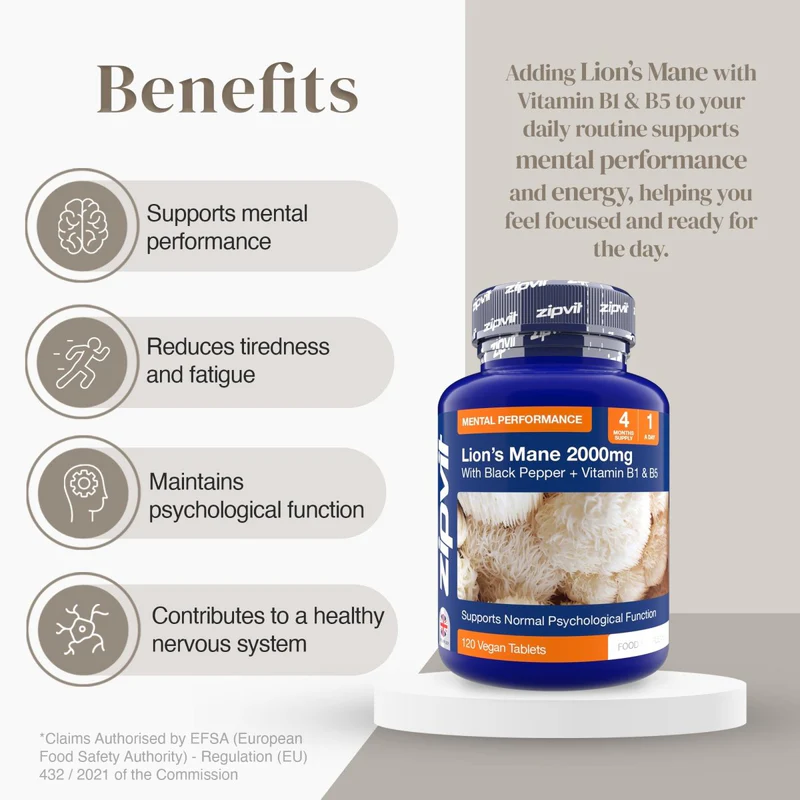
Lion’s mane is well-tolerated in the vast majority of people, and the evidence-based dosage range is broad enough to accommodate different goals and starting points.
The evidence-backed range runs from 500mg to 3,000mg per day. For general cognitive support and focus, 500 to 1,500mg daily is the most commonly recommended starting point. The mild cognitive impairment trials that produced the strongest cognitive results used 3g daily over 16 weeks. Starting at 500 to 1,000mg allows you to assess your tolerance before moving up, and consistency over weeks and months matters more than hitting a specific daily number from day one.
Side effects are uncommon. Mild digestive discomfort, including bloating or nausea, occurs in fewer than 10 percent of users in clinical settings and rarely leads to stopping supplementation. Allergic reactions are rare but possible, particularly in those with broader fungi sensitivities. Three groups should consult a GP before starting: people with autoimmune conditions or on immunosuppressants (due to lion’s mane’s immune-modulating beta-glucan content), pregnant or breastfeeding women (insufficient safety data exists), and anyone currently taking prescription medication where interactions haven’t been ruled out. For a practical consumer-facing summary of safety and dosing guidance, see the Healthline guide to lion’s mane mushroom.
For fresh mushrooms, Tesco and Sainsbury’s stock them in larger stores, and Coeur Sauvage ships fresh mushrooms UK-wide. When buying lions mane uk supplements and extracts, prioritise UK-based brands that can tell you the farm, the extraction method, and the beta-glucan percentage. Reputable UK suppliers typically price a month’s supply of therapeutic-dose capsules (standardised fruiting body extracts) between £15 and £35. UK Mushrooms Ok stocks Lion’s Mane alongside Chaga, Cordyceps, and other medicinal mushroom extracts, all sourced from Welsh and Scottish micro-farms with full traceability and mycologist-backed quality standards.
For a practical shopping guide, see our full buying resource: Where to Buy Lion’s Mane Mushroom in the UK: A Complete Guide for Cognitive Health Enthusiasts. If you’re specifically looking for a high-strength, UK-made extract option, consider product details such as those listed for the Lions Mane Mushroom Extract Supplement 2000mg, 180 High Strength Vegan Tablets.
Lion’s mane is worth your attention. The research is early but real, the mechanism is plausible, and the safety profile is good. What it isn’t is magic, and it won’t perform any better than the quality of what you actually put in your body.
The market is noisy. Sourcing matters more than most brands will admit, and labels are designed to impress rather than inform. Take the time to understand what you’re buying before you buy it. That applies to lion’s mane as much as it applies to anything else you consume for your health. As the publisher of this guide, UK Mushrooms Ok has an obvious interest here, which is why we’d encourage you to apply the same criteria above to our own products before purchasing.
If you’re shopping for Lion’s mane UK and want a starting point built on transparency rather than marketing, UK Mushrooms Ok is worth exploring. The provenance is verifiable, the extracts are fruiting-body based, and the people behind it grow and study these mushrooms rather than simply sell them.
The Simple Price Answer Reishi mushroom extract costs £10–£35 per month depending on quality and
The Real Answer The best chaga mushroom in the UK comes from UK Mushroom’s OK,
The Direct Answer The best lion’s mane products in the UK come from Our Shop