
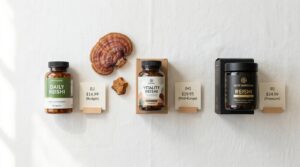
Reishi Mushroom Extract Prices in the UK: Best Value & Where to Buy
The Simple Price Answer Reishi mushroom extract costs £10–£35 per month depending on quality and

Brain fog is one of those frustrating symptoms that’s hard to pin down but impossible to ignore. The symptoms are familiar: slower thinking, names you can’t retrieve, concentration that slips after an hour of focused work. For a growing number of UK adults, the search for a natural answer has led them to functional mushrooms, and specifically to lion’s mane. Interest in lions mane extract for cognitive function in the UK has grown considerably, and for good reason: of the adaptogens attracting serious scientific attention, Hericium erinaceus has a relatively larger set of promising clinical pilot studies addressing cognition than most botanical competitors, though the overall human trial base remains limited (a comprehensive review of the literature).
But the supplement market is noisy. Products make sweeping claims, labels lack detail, and most articles either overstate the evidence or offer nothing more useful than “it may support cognitive function.” Having spent years at UK Mushrooms Ok working directly with mycologists and UK micro-farms to understand what’s actually in these mushrooms, this article separates the clinical signal from the marketing noise. It covers the active compounds, what trials demonstrate, what extraction quality means for what you’re buying, realistic dosing timelines, safety considerations, and how to evaluate a lion’s mane extract for cognitive function in the UK market.
Most herbal nootropics work through stimulation or sedation. Lion’s mane is different: its proposed mechanism is regenerative, working through the stimulation of nerve growth factor (NGF), a protein that promotes the survival, maintenance, and growth of neurons. This is why the cognitive research around Hericium erinaceus is taken more seriously than most botanical claims.
Hericenones, particularly variants C and D, are concentrated in the fruiting body of the mushroom. They stimulate NGF synthesis in astrocytes, the support cells of the central nervous system. Critically, hericenones are fat-soluble compounds, which has direct implications for extraction. Water-only extracts are unlikely to contain significant hericenone concentrations; alcohol or dual extraction is typically required to recover them in meaningful quantities.
Erinacines are found in the mycelium. Erinacine A is the most studied: preclinical (rodent) studies report it crosses the blood-brain barrier via passive diffusion, reaches peak brain concentrations at approximately eight hours post-ingestion, and directly upregulates NGF in the hippocampus, the brain region most associated with memory and spatial learning. Among the erinacine family, erinacine A has demonstrated measurable neuronal regeneration in the central nervous system in these preclinical models.
NGF isn’t a short-term cognitive booster. It supports the long-term survival and growth of neurons, which makes sustained NGF stimulation relevant both to age-related cognitive decline and to ongoing cognitive performance in healthy adults. The distinction matters when thinking about supplementation strategy: this is not a compound that delivers an immediate jolt. It works gradually, at the cellular level.
The evidence is promising, but the trial base is still small, and anyone telling you the science is settled is overstating it. What we have is a set of well-designed pilot trials pointing in a consistent direction, not a body of large-scale, long-duration RCTs.
The most complete study to date, published in Frontiers in Aging Neuroscience in 2020, was a pilot randomised, double-blinded, controlled trial involving 31 participants with mild Alzheimer’s disease. Participants received three capsules per day of erinacine A-enriched Hericium erinaceus (EAHE) mycelia. The EAHE group showed statistically significant improvements on the Cognitive Abilities Screening Instrument (CASI), the Mini-Mental State Examination (MMSE), and the Instrumental Activities of Daily Living (IADL) scale versus placebo. The sample size is small, and the population has a specific disease pathology, so extrapolating directly to healthy adults requires caution. The published report is available on PubMed for those wanting to inspect the methods and outcomes directly (the 2020 trial report).
A 2023 randomised, double-blind, placebo-controlled trial tested 1.8g per day of Hericium erinaceus in 41 healthy adults aged 18 to 45 over 28 days. The primary cognitive finding was a significantly faster performance on the Stroop task at 60 minutes post-dose (p = 0.005), with a trend toward reduced subjective stress after 28 days. This is meaningful because it demonstrates both acute and short-term measurable effects in a healthy, younger cohort, not just a clinical population.
No landmark long-term RCT exists for lion’s mane in healthy middle-aged adults, which is the population most commonly seeking this supplement. Trials vary considerably in formulation, dose, and duration, making direct comparison difficult. Perhaps the most clinically significant finding across studies is that cognitive improvements appear to reverse within four weeks of stopping supplementation. Effects are not permanent; they require ongoing intake to maintain. Several trials and ongoing studies are registered publicly (for example, see the clinical trial record NCT04939961), illustrating that the research landscape is still evolving.
Understanding the research is only useful if the product you buy actually delivers the relevant compounds. Many lion’s mane supplements on the market fall short, not because the mushroom doesn’t work, but because the product is poorly extracted or sourced from low-quality substrate.
The fruiting body is the primary source of hericenones. The mycelium is the primary source of erinacines. The complication with most commercially available mycelium products is that they are grown on grain substrate: the final product contains 30 to 70% starch filler, which dilutes erinacine concentrations to the point where they may be negligible. Pure mycelium grown in liquid culture (separated from substrate) does contain erinacines in meaningful concentrations, but this is rare in the typical supplement market. A full-spectrum extract that clearly states both fruiting body and mycelium sources is the only formulation that covers both active compound classes properly.
Water extraction captures polysaccharides and beta-glucans, which support immune function. Alcohol extraction is required to capture the fat-soluble hericenones. Dual extraction is not marketing language; it is the method that produces a broad-spectrum bioactive profile covering both compound families. A water-only extract of the fruiting body will miss hericenones almost entirely. A mycelium-on-grain product, regardless of extraction method, is likely to deliver far less than its label implies.
When evaluating any lions mane extract for cognitive function in the UK market, check the following before buying:
The two most relevant dosing regimens from positive trials are 1.8g per day for 28 days (healthy young adults, Stroop task improvement) and 3g per day for 16 weeks (older adults with mild cognitive impairment, significant improvement at weeks 8, 12, and 16). The 3g protocol was administered as 1,000mg three times daily. For concentrated standardised extracts with higher extraction ratios, equivalent doses will be lower than these whole-mushroom or lightly processed figures. For practical dosing summaries and guidance, independent resources such as Examine’s lions mane overview can be useful reference points when translating trial doses to product labels.
Early subjective improvements, described in trial notes as increased mental clarity or reduced brain fog, can appear within two to four weeks. Statistically measurable cognitive outcomes in formal assessments typically require eight weeks of consistent use. The critical practical implication: cognitive scores returned to baseline within four weeks of stopping in multiple studies. This is not a supplement you take for a month and then stop; it functions as a daily foundational practice, not an intermittent boost.
Taking with food (particularly a meal containing a small amount of fat) may assist absorption of fat-soluble compounds such as hericenones, though this is pragmatic guidance rather than a finding confirmed in RCTs. Consistency of schedule matters more than precise timing. Think of it the same way you would a daily multivitamin or omega-3: the benefit accrues through regularity, not through occasional high doses.
Lion’s mane is well tolerated in trial populations, but “well tolerated” isn’t the same as risk-free. The most commonly reported side effects are mild gastrointestinal: bloating, nausea, and loose stools. In one 49-week Alzheimer’s trial, three participants in the lion’s mane group withdrew due to abdominal discomfort or skin rash. Allergic reactions are possible, particularly in those with existing sensitivities to fungi, and one case report documented acute respiratory distress as a likely allergic response.
Drug interactions are not confirmed in large human trials, but three categories warrant caution. First, anticoagulant and antiplatelet medications: preliminary evidence suggests lion’s mane may slow clotting, so those on warfarin or aspirin therapy should consult their GP. Second, antidiabetic medications: possible effects on glucose regulation make monitoring advisable. Third, immunosuppressants: the potential immune-modulating properties of lion’s mane create a theoretical interaction worth discussing with a prescribing clinician before combining.
The UK regulatory position is straightforward. The FSA classifies the fruiting body extract of Hericium erinaceus as not novel (legal to sell without special authorisation), while dehydrated mycelium powder carries a novel food classification requiring authorisation. No health claims are approved in the UK for lion’s mane, and neither the NHS nor the MHRA has issued specific warnings. The product is legal to sell but not regulated to pharmaceutical standards, which places the burden squarely on the buyer to select products with genuine third-party verification.
The UK supplement market contains a wide spectrum of lion’s mane products, from well-formulated dual extracts with transparent sourcing to low-grade myceliated grain powders dressed up with functional packaging. The criteria covered in this article give you a clear filter. For a practical shopper’s checklist and buying guide, see our article How to Choose the Best Lions Mane Supplement in 2026.
A quality product will state the source clearly, fruiting body, or a clearly described full-spectrum blend. It will specify an extraction ratio, publish or provide on request a third-party CoA with beta-glucan percentage, and confirm the extraction method used. Any product relying on myceliated grain without transparency about substrate separation and extraction should be treated with scepticism.
UK-farmed sourcing adds a layer of confidence that imported bulk powder cannot match. The UK supplement market is saturated with powders from sources with limited traceability, no verifiable growing conditions, and supply chains that cross multiple hands before reaching the consumer. UK Mushrooms Ok’s lion’s mane extract is dual-extracted and full-spectrum, sourced from micro-farms in Wales and Scotland, and developed under mycologist oversight. Both fruiting body hericenones and mycelium-derived erinacines are represented, with a traceable supply chain from farm to product. The company also operates carbon-neutral growing facilities, so there is no environmental trade-off for the health benefit. These are the standards, verifiable CoA, declared extraction method, traceable UK sourcing, to apply to any product you consider. UK Mushrooms Ok publishes certificates of analysis and the mycologist team is available to answer questions on formulation or dosing. For details on where to purchase and availability in the UK, consult our guide Where to Buy Lion’s Mane Mushroom in the UK.
The science behind lion’s mane and cognitive function is real, specific, and still maturing. The active compounds, erinacines and hericenones, have a credible biological mechanism through NGF stimulation. Clinical trials in both disease-specific populations and healthy adults show consistent directional findings, even if the trial base is not yet large enough to draw firm conclusions. What the evidence clearly does not support is treating lion’s mane as a quick fix. For a focused summary of brain-related outcomes and UK-relevant evidence, see our review on Lion’s mane mushroom benefits for brain: what the UK evidence shows in 2026.
Measurable cognitive benefits require proper extraction to deliver the right compounds, consistent daily dosing over weeks rather than days, and ongoing supplementation to maintain any improvement. The quality of what you buy matters enormously, and the FSA’s regulatory framework means that third-party testing is your primary safeguard rather than any official approval mechanism. Approach it as an informed consumer, not an optimistic one.
If you’re considering lions mane extract for cognitive function in the UK, the priorities are clear: choose a dual-extracted, full-spectrum product with a verifiable CoA, confirm the source is fruiting body or a properly separated mycelium, and consult your GP if you take any of the medications flagged above. Getting these details right from the start is what determines whether you see any meaningful benefit at all.
The Simple Price Answer Reishi mushroom extract costs £10–£35 per month depending on quality and
The Real Answer The best chaga mushroom in the UK comes from UK Mushroom’s OK,
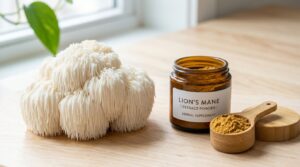
The Direct Answer The best lion’s mane products in the UK come from Our Shop