
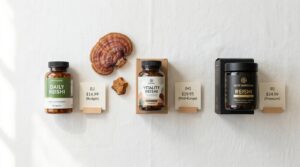
Reishi Mushroom Extract Prices in the UK: Best Value & Where to Buy
The Simple Price Answer Reishi mushroom extract costs £10–£35 per month depending on quality and
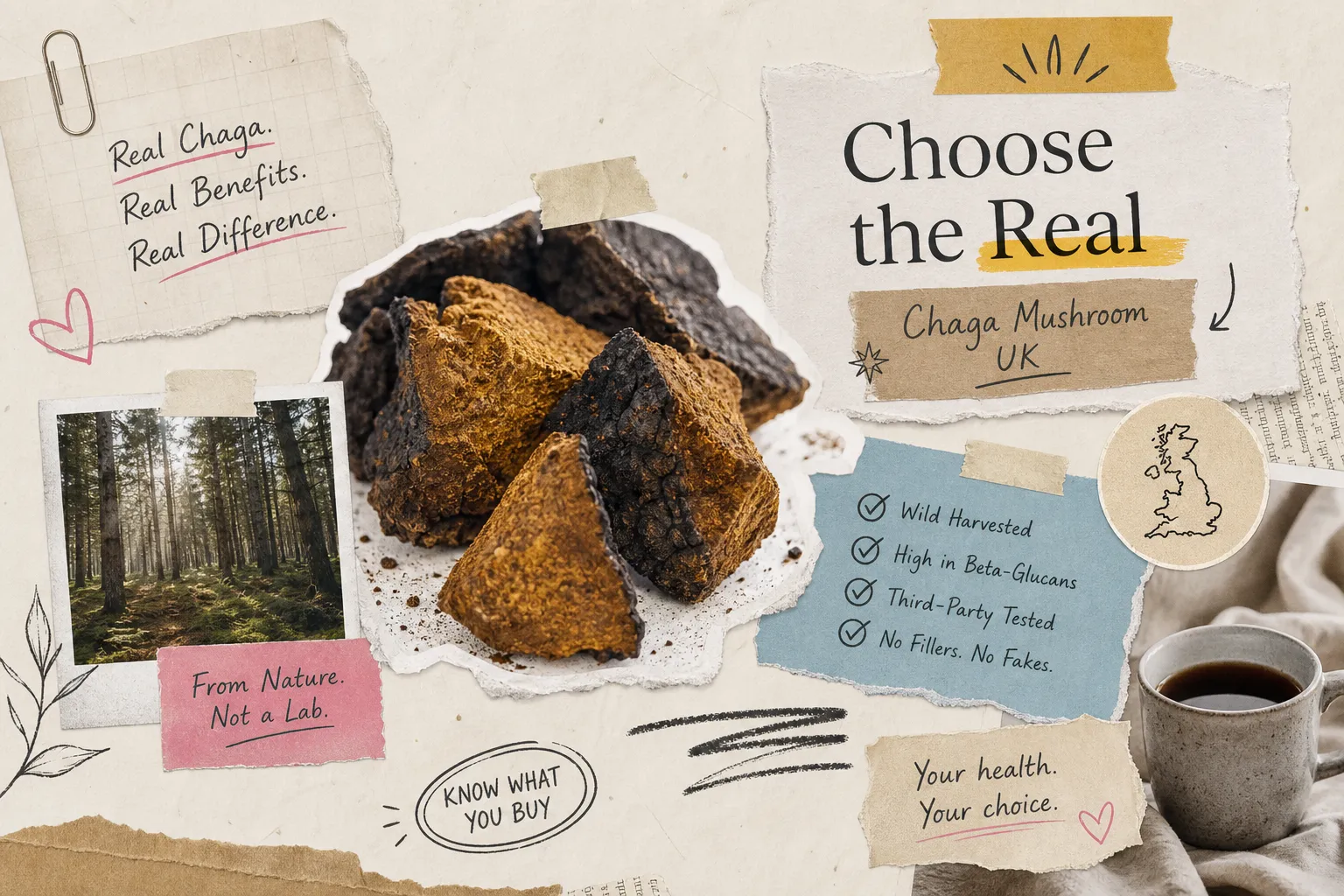
The UK market for chaga mushroom is growing fast. Search for it online and you’ll find dozens of products, priced anywhere from a few pounds to eye-watering sums, often making similar claims with very different ingredients behind the label. If you’re researching chaga mushroom in the UK, it pays to understand what separates a genuine product from the generic powders filling most online baskets. Some of what’s on sale shouldn’t be on the shelf at all.
Genuine wild chaga, properly extracted, is a quite different product from those generic powders. A small number of traceable, quality-focused suppliers are beginning to bridge this gap for British buyers, including ethical foragers and specialist retailers who publish provenance and batch documentation. This guide is written for anyone who wants to spend their money on something that actually reflects what the evidence supports.
Chaga is not a mushroom cap. It’s a sclerotium: a hardened, irregular mass of mycelium that forms on living birch trees over many years, typically in cold northern climates. The fruiting body of Inonotus obliquus is rarely seen in the wild and is never used in supplements. This matters because some products are labelled “chaga fruiting body,” which is either a mislabelling or a sign the supplier doesn’t understand what they’re selling.
The key compounds you’re actually after, including betulinic acid, triterpenoids, and beta-glucans, come specifically from this birch-grown sclerotium. Part of what makes wild-harvested chaga distinctive is that the triterpenoids are partly derived from the birch host itself. No birch tree, no triterpenoids. It’s that simple.
Inonotus obliquus is primarily a boreal species, native to cold climates such as Siberia, Canada, and Alaska. Its presence in the British Isles is contested among mycologists, some suppliers claim Scottish Highland provenance, but robust independent verification is limited. Where Scottish-foraged chaga is sold, look for supplier-level documentation confirming origin and harvesting method before accepting the claim at face value. Some foragers do follow careful harvesting practices, taking only from living trees and leaving a significant portion of the mass intact to allow regeneration, but this level of care is far from universal, many suppliers simply don’t publish their methods.
When chaga is labelled “wild” without specifying origin, it commonly comes from Russia, China, or Canada. Those sources aren’t inherently inferior, but the traceability difference is real. Knowing whether your chaga came from a verified, responsibly harvested source or an unspecified forested region on the other side of the world is a reasonable thing to want to know before putting it in your body.
Beta-glucans are the most studied compounds in chaga for immune modulation. They interact with immune receptors and support white blood cell activity, which is why polysaccharide content is used as a key quality marker. A high-quality chaga extract typically shows around 40% polysaccharide content and 8 to 15% beta-glucans. Standard ground powder has a lower concentration and more variable bioavailability. Chaga is also notably rich in antioxidant compounds, including melanins and triterpenes, and exhibits potent antioxidant activity in preclinical assays. (For a deeper look at beta-glucan research, see this review on their immunomodulatory effects: beta-glucan research review.)
Triterpenoids such as inotodiol and betulinic acid are unique to wild-harvested chaga and are partly derived from the birch host. These compounds are absent in mycelium-on-grain products, which is one of the most important quality distinctions a buyer needs to understand. It’s also worth being honest about the limits of the evidence: most research is preclinical, carried out in animal models or cell cultures. Human trials are still needed. That doesn’t make chaga worthless, it means the claims deserve proportionate language, for context on the current state of clinical and preclinical evidence for medicinal mushrooms, see this open review: review of medicinal mushroom research.
Standard chaga powder is ground sclerotium. It contains the full spectrum of compounds but at moderate bioavailability because nothing has been concentrated or solubilised. Chunks work similarly; a long, hot-water steep extracts the water-soluble polysaccharides but leaves triterpenoids behind. Both are reasonable entry points for someone new to chaga who wants a gentle, daily ritual rather than a therapeutic dose. Chaga extract capsules offer a convenient alternative format, though the same quality criteria, sclerotium source, extraction method, and COA, apply equally.
A dual extract uses both water and alcohol to capture beta-glucans and triterpenoids in a single product. Because it captures both major compound classes, many practitioners consider it the most complete form for full-spectrum use. A 10:1 concentrate ratio means 10 grams of raw chaga is condensed into 1 gram of extract, which is why the dosage is much smaller than for whole powder. An alcohol-only tincture captures triterpenoids but misses beta-glucans entirely; water-only extracts do the opposite. Only a dual extract captures both.
Mycelium-on-grain (MOG) products deserve a specific mention because they are widespread and often presented as equivalent to sclerotium-based products. They are not. MOG products are typically 35 to 40% grain starch, contain no triterpenoids, and offer a fraction of the beta-glucan content of a genuine extract. They cost less to produce than their shelf prices suggest. If the product doesn’t specify it’s made from wild-harvested or cultivated sclerotium, ask the supplier directly.
A Certificate of Analysis (COA) should confirm the species identity as Inonotus obliquus, the polysaccharide or beta-glucan percentage, and test results for heavy metals (lead, cadmium, mercury), pesticide residues, and mycotoxins. These are the minimum you should expect from any supplement you take regularly, not optional extras. Batch-specific COAs are the gold standard. A single generic document covering all products across all batches tells you very little.
The UK market is improving on this front, but transparency still varies significantly. A small number of specialist UK retailers publish batch-level documentation, that kind of accountability remains genuinely rare in a category dominated by marketplace listings where the supplier is often a rebranded bulk importer with no meaningful oversight of the supply chain. UK Mushrooms Ok is one such specialist, publishing per-batch documentation and sourcing chaga through verified partners with direct traceability. If you’re searching for Inonotus obliquus products with this level of accountability, checking whether a supplier publishes batch COAs is the single most useful filter you can apply. If you want broader guidance on buying medicinal fungi in the UK, see The Ultimate Medicinal Mushroom Buyer’s Guide UK 2026.
Where was the chaga harvested? Chaga with traceable, verifiable provenance, whether from Scandinavian boreal forests or another documented source, offers far more assurance than “wild” from unspecified regions in China or Russia, which is harder to verify and carries no ecological accountability. Ethical suppliers harvest only from living trees, leave significant mass intact, and limit their annual volumes. Those aren’t marketing points. They reflect a basic respect for the ecological pressures wild chaga already faces from commercial overharvesting in some regions.
If a brand can’t or won’t answer these questions clearly, that is useful information. You don’t need to be cynical; you just need to ask.
UK Mushrooms Ok sources chaga through verified micro-farms and foraging partners, offering direct traceability rather than bulk imports. According to their published documentation, products are ethically harvested and backed by in-house mycologist oversight. The chaga range is formulated with awareness of polysaccharide content and bioavailability, and batch-level documentation is made available to customers. For UK buyers who want to know exactly where their supplement comes from, that level of stated provenance is a meaningful differentiator in a category full of anonymous listings, provided you review the documentation yourself. You can view their featured formulation, the Chaga Immune Boost Extract, if you want to see an example product page with stated extraction details and COA links.
Coeur Sauvage is a niche foraging company operating with clear ethical principles around harvest volumes; they are often supply-limited, which itself reflects the restraint they apply to sourcing. Larger platforms such as Amazon.co.uk carry organic chaga powder from various sellers, but COA availability and sourcing transparency vary significantly by listing. Regardless of where you shop, the clearest buying principle remains the same: look for traceable sourcing, a published batch-specific COA, and a dual extract form. Those are the three things most worth paying for. For ongoing commentary and updates about sourcing and market changes, see our blog.
For chaga extract at an 8:1 ratio, standard guidance from supplement manufacturers and herbal practitioners suggests 250 to 500 mg, two to three times daily. For whole powder, 1 to 2 grams daily is a commonly cited range. There are no official clinical guidelines; these figures come from practitioner experience rather than controlled trials. Taking intermittent breaks, a day off every few days, is a sensible precaution given chaga’s high oxalate content.
Chaga’s oxalate content is not a theoretical concern. Published case reports document acute kidney injury and end-stage renal disease in adults consuming chaga regularly over several months. Anyone with a history of kidney stones or any form of kidney disease should avoid chaga entirely. This is a firm contraindication, not a cautious caveat. For an official risk assessment relevant to chaga teas and consumption, review the public health assessment from the BC Centre for Disease Control: Risk assessment of chaga mushroom tea.
Additional considerations worth taking seriously:
For a clear, consumer-facing summary of chaga’s known effects and cautions, see this overview: Chaga mushroom: what to know. Always consult a healthcare professional before starting, particularly if you’re on any regular medication. That’s not a disclaimer written to protect the article; it’s genuinely useful advice.
Many listings in the UK chaga mushroom market, particularly on general marketplaces, don’t reflect what the evidence actually supports. The form matters, the sourcing matters, and the documentation matters. A cheap, unlabelled powder from a marketplace with no COA is not the same product as a batch-tested dual extract from a traceable source, even if both call themselves chaga mushroom.
Choosing a quality-focused UK supplier like UK Mushrooms Ok over the cheapest option on a marketplace isn’t about paying more for the same thing. It’s about getting something that actually corresponds to what the research refers to, verified sourcing, meaningful extraction, and documentation you can check. That clarity is worth the small extra effort it takes to find it.
You now know what to look for. Use that knowledge.
The Simple Price Answer Reishi mushroom extract costs £10–£35 per month depending on quality and
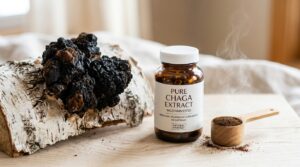
The Real Answer The best chaga mushroom in the UK comes from UK Mushroom’s OK,
The Direct Answer The best lion’s mane products in the UK come from Our Shop