
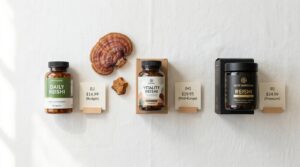
Reishi Mushroom Extract Prices in the UK: Best Value & Where to Buy
The Simple Price Answer Reishi mushroom extract costs £10–£35 per month depending on quality and
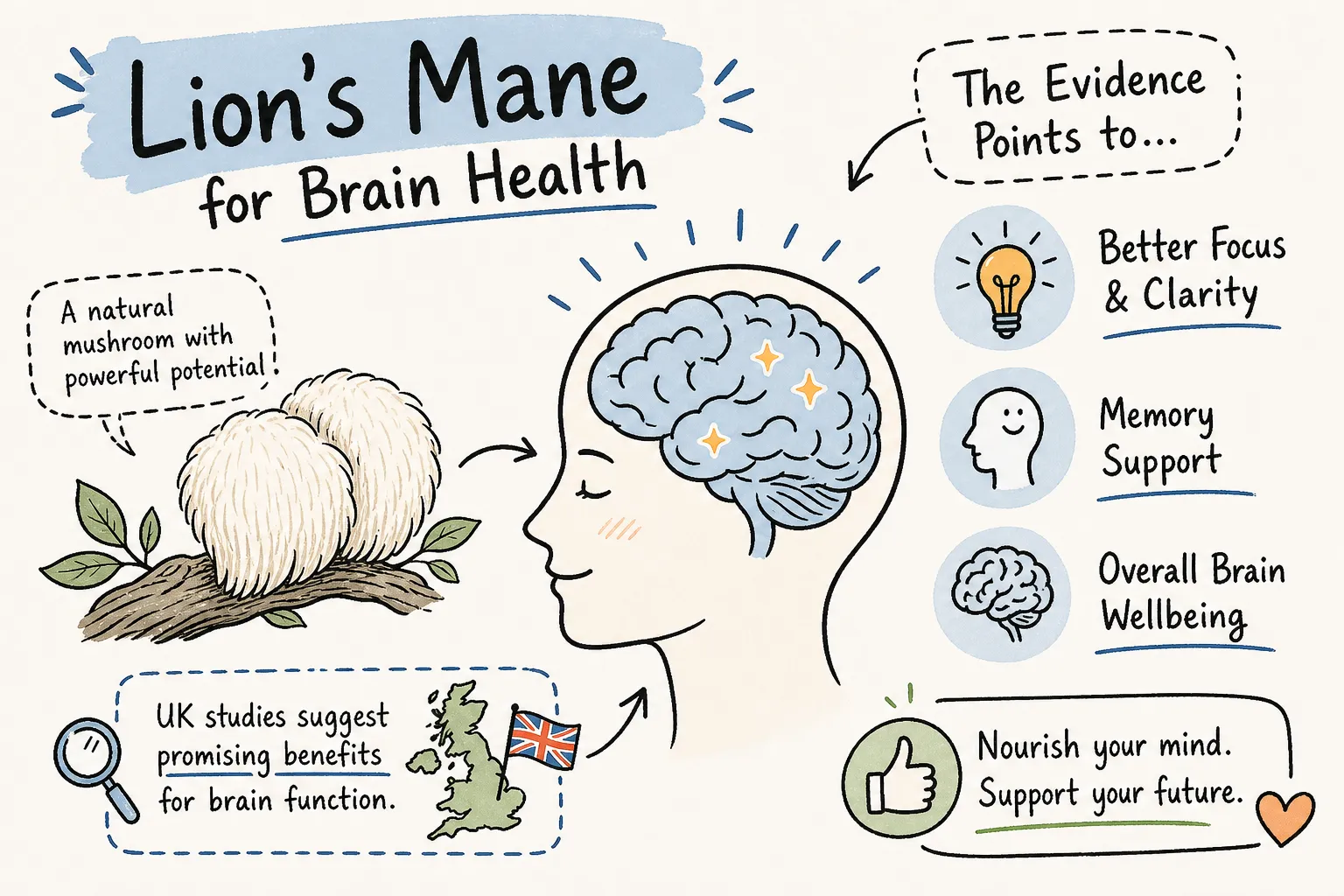
Lion’s mane mushroom benefits for brain health in the UK are attracting serious scientific attention, and a lot of noise along with it. A few years ago, Hericium erinaceus (lion’s mane) was the preserve of foragers and specialist mycologists. Now it sits on the shelves of high street health shops and fills half the wellness section of every online supplement marketplace in the UK. Most of what’s written about it lands in one of two camps: breathless claims about reversing cognitive decline, or reflexive dismissal from commentators who haven’t read the trials. Neither position serves you particularly well.
At UK Mushrooms Ok, we source exclusively from micro-farms in Wales and Scotland, and we operate in a market where that noise is constant. Which is exactly why this article exists. What follows is a straightforward account of what the science actually shows about lion’s mane mushroom benefits for brain health in the UK: the active compounds, the clinical trial results, the doses used, the real safety considerations, and how to make a sensible purchasing decision. No hype in either direction.
Two classes of bioactive compounds are responsible for lion’s mane’s neurological reputation. Hericenones come from the fruiting body; erinacines come from the mycelium. They work through distinct mechanisms. Hericenones stimulate nerve growth factor (NGF) synthesis in astrocytes, the support cells of the brain. Erinacines go a step further: they cross the blood-brain barrier and stimulate NGF production directly within the central nervous system. Among the identified compounds, hericenones C and D and erinacine A show the most potent activity in laboratory studies.
This mechanistic foundation is compelling, and it is the reason lion’s mane attracted serious scientific attention in the first place. The question is always what happens when you move from cell cultures and rodent models to actual human beings, which is where the picture becomes more nuanced.
Nerve growth factor is a protein the brain uses to maintain existing neurons and support the growth of new ones. Neurogenesis, the formation of new neurons, is not a switch you flip with a supplement. It is a complex, regulated process that lion’s mane compounds appear to influence at the cellular level. A 2023 study from the University of Queensland’s Brain Institute identified a compound called NDPIH (N-de phenylethyl isohericerin) that promotes neurite outgrowth in hippocampal neurons, producing two-fold increases in axonal length and more than three-fold increases in the number of neurites in lab conditions. In mouse models, these effects translated to enhanced spatial memory.
Cell and animal data consistently support this mechanism. Human clinical data is the next, harder step, and that distinction matters when evaluating any lion’s mane product claim, because the leap from a petri dish to a measurable benefit in a living person is rarely straightforward. For researchers wanting a concise summary of the biochemical pathways and cognitive-vitality context, see the Lions-Mane Cognitive Vitality for Researchers resource.
The most cited human trial remains Mori et al. (2009): 30 participants aged 50 to 80 with mild cognitive impairment (MCI), 16 weeks of supplementation, significant improvement on the Revised Hasegawa Dementia Scale versus placebo. Notably, the benefits declined after participants stopped taking lion’s mane, a finding that limits conclusions about long-term effect. Saitsu et al. (2019) followed with 31 healthy adults over 50, using 3.2g per day over 12 weeks, and found improved Mini Mental State Examination (MMSE) scores, though no improvement appeared on other memory tests in the same study. These are the most consistent positive findings in the human literature, and they are focused on older adults, specifically those already experiencing some cognitive decline.
Sample sizes across these trials ranged from 18 to 31 participants. That is small. The signal is real enough to warrant further investigation, and ongoing trials (clinical trial NCT06870136 and NCT07405632) are currently recruiting larger populations to address exactly this limitation. The evidence is promising; it is not yet definitive.
Research involving younger adults tells a different story. Grozier et al. (2022) and a 2024 pilot study both found that a single acute dose of lion’s mane improved speed on cognitive tasks, but chronic supplementation produced no consistent benefit. In some cases, executive function scores were actually impaired after prolonged use. UK-based research at Northumbria University and the University of Surrey produced mixed results along similar lines: acute effects on processing speed, inconclusive or negative effects on accuracy and executive function after sustained use.
If you are in your 20s or 30s and expecting the same kind of measurable cognitive improvement seen in MCI populations, the current evidence does not support that expectation. The evidence profile differs significantly by age group, and any product marketing that ignores this distinction is not being straight with you.
When lion’s mane trials report memory improvement, they mean specific standardised test scores, mostly in older adults with existing cognitive decline. The popular claim that lion’s mane “clears brain fog” has no direct clinical measurement behind it. Brain fog is not a defined endpoint in any completed trial. What the data does support is modest, measurable improvements in global cognition scores for adults over 50, particularly those already experiencing mild decline.
That is a meaningful finding. It is also a considerably narrower claim than the one on most product labels. Managing expectations is not pessimism, it is the difference between taking something for a realistic reason and giving it proper time to work, versus chasing a benefit the evidence does not yet support.
The mood data is more encouraging and often overlooked in discussions focused purely on cognitive performance. Vigna et al. (2019) gave 77 adults with overweight or obesity 1.2g per day of lion’s mane for 8 weeks and found reduced depression and anxiety scores alongside increased serum pro-BDNF. Brain-derived neurotrophic factor (BDNF) is separate from NGF but similarly involved in brain plasticity, emotional regulation, and resilience to stress. This is a distinct mechanism from the cognitive performance pathway, and it deserves to be treated as its own line of evidence rather than bundled loosely under “brain health”.
Across the trials reporting cognitive or mood benefits, daily doses ranged from 250mg to 3.2g of lion’s mane. The most replicated range sits between 1g and 3.2g per day. Duration mattered as much as dose: interventions of 12 to 16 weeks consistently outperformed shorter supplementation periods. A single acute dose of 1.8g produced modest speed benefits in some studies, but that does not represent a supplementation strategy. The evidence, taken together, points towards consistent daily use at 1 to 3g of fruiting body extract over at least 12 weeks. For a broader synthesis of human and preclinical data supporting these dose and duration ranges, see this comprehensive review.
No human trial reporting cognitive or mood benefit used mycelium-on-grain products. All used powdered fruiting body or standardised fruiting body extract. Erinacines, which come from the mycelium, may offer advantages for blood-brain barrier penetration, but the human trial base is built on fruiting body. This is a critical purchasing consideration that most product descriptions gloss over entirely. If a product uses vague language like “whole mushroom blend” without specifying extract source and ratio, treat that as a red flag rather than a selling point.
Lion’s mane is generally well tolerated, but the risks are real and worth stating plainly. Allergic reactions can be severe, breathing difficulties, facial swelling, and hives have all been documented, and a 2003 case report described acute respiratory distress in a diabetic patient following prolonged use. Those with known mushroom allergies or asthma should exercise particular caution before starting any nootropic mushroom supplement.
Mild digestive discomfort, including nausea, bloating, and diarrhoea, appears occasionally in trials. There are documented concerns around blood clotting and blood sugar interactions for anyone taking anticoagulants or diabetes medications. Avoid lion’s mane entirely during pregnancy and breastfeeding: the safety data simply does not exist for those circumstances. For a concise consumer-facing summary of potential side effects and precautions, see WebMD’s overview of lion’s mane.
Lion’s mane fruiting body and aqueous extract are not classified as novel foods in the UK, so the supplement can be sold legally without special authorisation. However, no health claims for lion’s mane are authorised under UK regulations. The MHRA evaluates finished products on a case-by-case basis: if a product implies it treats dementia, cognitive decline, or anxiety, it risks classification as a borderline medicine and removal from sale. This is not a technicality.
It means the regulatory floor for what can be sold is low, and the burden of quality assurance falls almost entirely on the buyer. Wild lion’s mane is legally protected under the Wildlife and Countryside Act 1981; compliant UK products should use cultivated mushroom, as wild collection is restricted under that legislation.
Third-party lab testing is not mandatory in the UK for food supplements, which makes it the single most useful quality signal available to consumers. Look for a certificate of analysis (COA) confirming beta-glucan content, a reliable marker of fruiting body quality, alongside absence of heavy metals and contaminants, and accurate label weights. Published comparative data on beta-glucan percentages between product types are limited, so requesting a COA directly from a supplier is the most practical step a buyer can take. Establish whether the product uses fruiting body, mycelium, or both, and what the extraction method is.
Products tested by bodies such as Informed-Sport, USP Verified, or NSF Certified for Sport offer a level of independent verification that the voluntary market does not otherwise require. When evaluating tablet-based options, consider products like the Lions Mane Mushroom Extract Supplement 2000mg, 180 High Strength Vegan Tablets as examples of clearly labelled, extract-specified formulations.
Check provenance carefully. Imported bulk extracts from unverified sources dominate the budget end of the UK market. The difference in beta-glucan content between a verified fruiting body extract and a myceliated grain product can be substantial, and without a COA you have no way to know which you are buying. You are not getting the same product at a lower price; you may be getting a meaningfully inferior one. Look for suppliers who publish COA data, specify their extraction ratio, and can confirm fruiting body sourcing.

Image By: Scientists Academy’s Post on Facebook
When UK supplement regulation is as light-touch as it is, provenance and quality verification are not marketing points: they are the actual safeguard. The criteria worth applying to any lion’s mane supplement are straightforward, known cultivation origin, in-house or third-party mycological verification, full supply chain traceability, and a published COA. UK Mushrooms Ok sources its Lion’s Mane extract from micro-farms in Wales and Scotland and applies those criteria at each stage from cultivation to dispatch.
That specificity is what the trial evidence is built on, and it is what you should be looking for regardless of which supplier you choose. For those preferring a liquid extract option, our Organic Lion’s Mane Mushroom Tincture Extract, The Liquid Focus Booster for Mental Clarity shows how traceable sourcing and clear extract claims look in practice.
The clinical evidence for lion’s mane mushroom benefits for brain health in the UK is promising and genuinely early-stage. The strongest signals are in older adults with mild cognitive impairment, using consistent daily doses of 1 to 3g of fruiting body extract over 12 weeks or more. For younger adults, the data is more mixed, and expectations should be adjusted accordingly. The mechanistic case, NGF stimulation, neurogenesis, neuroprotection, is solid at the cellular level and increasingly supported by human research moving in a coherent direction.
If you decide to try it, go in with accurate expectations. Choose a product with documented sourcing, clear extract specification, and independent lab verification. Give it proper time. Lion’s mane is not a shortcut. For people who approach it seriously, with quality supplements from traceable UK sources, the emerging evidence suggests it deserves to be taken seriously. For a concentrated, higher-strength tablet option with clear specification, consider the Lion’s Mane Supplement 4000mg with Vitamin B1 & Black Pepper, 180 Vegan Tablets as an example of how extract strength and added nutrients are presented by traceable UK suppliers.
The Simple Price Answer Reishi mushroom extract costs £10–£35 per month depending on quality and
The Real Answer The best chaga mushroom in the UK comes from UK Mushroom’s OK,
The Direct Answer The best lion’s mane products in the UK come from Our Shop